
| 
| 
| 
| ||||||||
Obama Belongs on List of World's Tyrants | Against Authoritarian Threat of Far-Right |
 |
 |
Showing posts with label blogging. Show all posts
Showing posts with label blogging. Show all posts

Free The Ethiopian Bloggers: 4 Ways You Can Join the #FreeZone9Bloggers Campaign
 |
| Zone 9 Tumblr Collage. Images selected from zoneniner.tumblr.com. |
By Global Voices Advocacy
Befeqadu Hailu, Abel Wabela, Atnaf Berahane, Mahlet Fantahun, Zelalem Kibret, and Natnael Feleke (all members of the Zone 9 blogging collective) and journalists Asmamaw Hailegeorgis, Tesfalem Waldyes and Edom Kassaye were arrested on April 25 and 26, 2014 in Addis Ababa. They have since been held in Maekelawi detention center with no access to legal counsel. They have not been allowed to see their families.
Since 2012, the Zone 9 blogging collective has worked to foster civic engagement and critical commentary about social and political issues in Ethiopia, alongside fellow journalists seeking similar results through newspaper work. Their arrest and detention constitute a violation of their universal human right to free expression, and their right not to be arbitrarily detained, as protected by Article 6 of the African Charter on Human and Peoples’ Rights.
The Global Voices community and our network of friends and allies are demanding the release of the nine men and women.

Here are four ways that you or your organization can lend support to the campaign:
1. Send a letter: Write to your country's ambassador to Ethiopia or to the African Commission office in your country. Use one of these templates to get started. Deliver the letter by hand, like our friends in Uganda did.
2. Add your photo and message of support to the Free Zone 9 Tumblr
3. Sign the Global Voices Community Statement urging for the bloggers’ release
4. Spread the word! Talk to your friends, family, and colleagues about the campaign — share articles and links, work together on joint letters to policymakers, or plan a gathering.
Global Voices Coverage of Zone 9 Bloggers Case
Why Blogging is a Threat to the Ethiopian Government May 10, 2014
Advocates Ask African Commission, UN Experts to Intervene in Zone 9 Bloggers Case May 3, 2014
STATEMENT: Global Voices Calls for the Release of Nine Journalists in Ethiopia, May 2, 2014
Netizen Report: Ethiopia Cracks Down on Free Expression, April 30, 2014
Six Members of Blogging Collective Arrested in Ethiopia, April 25, 2014

Reprinted with permission from Global Voices.
The Raza Rumi Assasination Attempt: 'When I Heard the Sounds of Bullets, I Knew They Had Come for Me’
 |
| Raza Rumi. Image credit Raza Rumi. |
Well-known Pakistani blogger, influential Twitter user and TV host Raza Rumi was attacked on March 28 in Lahore on his way home by a spray of gunfire. Although Rumi escaped with only a minor injury, his 25-year old driver was killed. His guard was also seriously injured.
Rumi, a one-time contributor to Global Voices, was on the Taliban's hit list because he opposed the government's peace talks with the militant group and his moderate views were taken as anti-Islamic.
Global Voices recently talked with Rumi about the terrifying experience and the precarious situation of journalists in Pakistan.
Global Voices (GV): Did you receive threats prior to the attack?
Raza Rumi (RR): Yes, I had received threats in two or three forms. There were lot of threats given on social media on Facebook and Twitter- certain threats on Facebook were very graphic. They were sighting various texts saying, “People like you who are secular are anti-Islam and need to be eliminated-they have to be killed”. And there were couple of death threats on Twitter even last year, and I used to report them also. But the problem with social media is that they would immediately deactivate or delete their accounts or these account are anonymous.
I also got indirect threats on my TV show on Capital TV. There were live callers who were always insinuating or hinting that whatever I was saying was offensive and wrong about the Taliban and I will have to face consequences. Then in January-February, the TTP [Tehreek-e-Taliban Pakistan] issued a list of people who are in their so called hit list and my name was also there. I tried to ask around whether these threats are credible and I got mixed views. Some people said, it is just to scare you and don't take it seriously. And then off course the Express media group I joined in January had already suffered a few attacks. They also received faxes and threat letters in which I was also mentioned.
GV: Did you report the threats to authorities? Did you get any response?
RR: You can report these threats to Pakistani authorities but fact of the matter is, nothing happens. Frankly one has such low faith in the ability of our authorities to do something. But I did alert them and told them about the threats I was getting – by and large I thought, let me take it in my stride and god will save me. But obviously I was wrong, and it finally happened to me. When I heard the sounds of bullets, I knew they had come for me. My mind suddenly picked up the signal and I immediately hid myself and laid down on the floor of the car. The bullets were crossing over me. The fired from the sides, from the back and front of the car, and I could hear the bullets. In fact, they had done their job; luckily I survived. My faith in miracles has been revived after this incident.GV: Did you inform your employer, the Express media group, about the threats?
RR: Yes, I did. I made the first call to my colleague in the Express when I was attacked. I told the chief executive officer and they came around and did all they could. I informed the Express group even earlier about these threats and they advised me to be soft, not to be too hard on the extremists (Taliban). I wouldn't call it censorship – they were advising caution and change of tone. In all fairness I would admit that I did act on their advice.GV: You discontinued your TV show following the attack. Was it your personal decision or were you advised to do so by your employer?
RR: Initially I took a break as it was getting stressful for me. I was traumatized by this incident. There was trauma, there was paranoia and above all there were threats. After the attack, I was locked in my house for ten days. Police had told me not to move without security. I was also cautious after the horrific death of my 25-year-old driver and injuries to the other person. I didn’t want any human being to be harmed on my account. I recently realized that I was doing it for myself because the state was not doing much for my security. All security experts were unanimous of the view that the attackers had missed their target and they would come back to strike again. What choice do I have? I had to go out of Pakistan to regain my sanity – I was going bonkers. Now I have been away and it is logistically difficult to do these shows from abroad.GV: The Punjab police arrested six men, who are members of banned militant organization Lashkar-e-Jhangvi (LeJ), in the attack. Will the government be able to bring those responsible to justice?
RR: I fully hope and pray that the government shows that kind of resolve and ability, but judging the track record of our criminal justice system, I am not very hopeful. The police have said that these people are from a banned militant outfit and that banned organisation is well known for its ability to muzzle the process of justice in Pakistan. But I want to press hard and hard that the killers of my 25-year-old driver Mustafa and his family should get justice.GV: According to a recent report by Amnesty International, the situation of journalists in Pakistan has deteriorated. A total of 34 journalists have been killed in response to their work since democracy was restored in 2008. Since Nawaz Sharif took over in June 2013, at least eight journalists have been killed in the line of duty. What is your take on this?
RR: It shows that the civilian governments are not fully in charge of the country’s security policy. Because the policy requires doing something about the very powerful non-state actors. According to the police, I may have been attacked by one of those non-state actors. Firstly, this situation would only improve if federal or provincial government would have a clear policy of what to do with these banned organisations.GV: What role can media houses play to bring security and safety to journalists?
Secondly, it's the seventh year that civilians have been in charge but the civilians have not made an effort to reform the police system, or the civil service or even bring back the local government system. What that essentially means is that they have contributed to the existing state of lawlessness and insecurity. It is not just for journalists – the ordinary people are vulnerable. But most journalists are vulnerable because they face two kind of threats – state and non-state. Sadly, the two governments haven’t done much about the safety and security of journalists.
The case of Saleem Shahzad is instructive. He was killed in 2011. He was picked up from the capital and later his body was found. The then government set up a commission and it took ages and ultimately the report came out and it didn't say much. It is time for the political parties to take lead. As almost all the political parties of Pakistan are sharing power in the provinces, if they wouldn't do enough for the media freedom then their own democratic future is uncertain.
RR: We keep on blaming the ISI [government spy agency Inter-Services Intelligence] and state authorities but the question is – are these big powerful corporate entities playing the kind of role they ought to play? They don’t equip their staffers when they go out in the war zone or to cover a blast scene. They don’t even give them health insurance. And they are not uniting to fight against the common enemy. Their personal and corporate rivalries outweigh journalists’ security.GV: What is the future of journalism in Pakistan?
RR: The future is going to be full of danger until we have the media houses waking up. The future of security of journalists is linked to the security of ordinary Pakistanis.
Feature image used with this post is from Raza Rumi's Facebook page. He's at a Literature Festival in Lahore February 2014.
Reprinted with permission from Global Voices.
Saudi Blogger Sentenced to 10 Years in Prison, 1000 Lashes: Blog 'Saudi Arabian Liberals' Provided Debate on Religious Issues

By Afef Abrougui
On 7 May, a criminal court in Jeddah sentenced blogger Raif Badawi to ten years in prison and a thousand lashes for “insulting Islam”. Badawi was prosecuted for developing “Saudi Arabian Liberals”, an online forum he launched in 2008 debating the role of religion in the conservative kingdom.
The 32-year-old was also ordered to pay a one million riyals fine (approximately US$266,600).
The verdict is subject to appeal. But Badawi's lawyer, Waleed Abu al-Khair, has also been jailed for setting up a human rights monitoring group, according to Human Rights Watch.
Arrested in June 2012 and tried in July 2013, Badawi originally was sentenced to six years in prison and 600 lashes. In December 2013, an appeals court overturned the initial verdict and referred the case back to the Jeddah Criminal Court.
Sad day for #humanRights #raifbadawi pic.twitter.com/zUTvOWe6Kg
— Yes we can (@Jihane_MD) May 7, 2014
Saudi Arabia, Britain's ally & top arms customer, has sentenced blogger @raif_badawi to 10 years in prison and 1000 lashes #IStandWithRaif
— Daniel Wickham (@DanielWickham93) May 8, 2014
On his website, Badawi and other contributors posted articles
critical of Saudi religious authorities and declared May 7 a day for
Saudi liberals.
السجن بسبب منتدى يرحب بالجميع أن يتحاور،أن يطرح قناعاته للنقاش! منذ متى يغير السجن الفكر؟! #الحكم_على_رائف_بدوي pic.twitter.com/83g1ZznGXd
— طاهر الزهراني (@6aher_alzahrani) May 8, 2014
Jail over a forum that welcomed everyone to debate and present their arguments for discussion. Since when prison changes thought?
رائف كان ينتقد المجتمع الازدواجي و يدعوا للأنسانية و احترام الرأي الاخر اذا كانت هذه جريمه فانا مجرمة #السجن_10سنوات_لرائف_بدوي
— أميمه Omaima (@Omaima) May 7, 2014
Raif criticized a double-standard society and called for humanity and respect for the other's opinion. If this is a crime, then I declare myself a criminalProsecutors had previously charged Badawi with apostasy, a charge which could carry a death penalty in the Saudi kingdom.
Reprinted with permission from Global Voices.
Propaganda 101: Obama Administration is Deploying Bloggers Against Its Critics

National Journal reporter James Oliphant (5/9/14) has discovered that the Obama White House has a very powerful weapon it can deploy against its critics: bloggers.
As he writes:
Credit him for the scoop, I guess: Who knew that liberal bloggers would tend to support a Democratic administration?When critics attack, the White House can count on a posse of progressive writers to ride to its rescue. Pick an issue, from the Affordable Care Act to Ukraine to the economy to controversies involving the Internal Revenue Service and Benghazi, and you'll find the same voices again and again, on the Web and on Twitter, giving the president cover while savaging the opposition. And typically doing it with sharper tongues and tighter arguments than the White House itself.
The problem is that Oliphant thinks there's really something important here. His first example: Some liberal outlets think Republican politicians and conservative pundits have gone crazy over Benghazi. But one doesn't need to think much of the Obama White House to think that the Benghazi "scandal" isn't one. Nor does a cogent critique of the conservative conspiracy theory about Benghazi mean that outlets much more prominent than any blogger will stop featuring the conservative line on their front pages (FAIR Blog, 5/1/14)
What's more, Oliphant sees this Obama defense squad as being completely unusual:
This is nonsense. The previous administration had a 24-hour cable news outlet and a slew of right-wing talk radio hosts that it could count on to support its agenda and (quite literally) demonize its opponents. Oliphant notes that some liberal-leaning bloggers visit the Obama White House, but this is not unusual–Bush hosted high-profile right-wing talkers, too (New York Times, 10/17/06).While the bond between presidential administrations and friendly opinion-shapers goes back as far as the nation itself, no White House has ever enjoyed the luxury that this one has, in which its arguments and talking points can be advanced on a day-by-day, minute-by-minute basis. No longer must it await the evening news or the morning op-ed page to witness the fruits of its messaging efforts.
The previous Democratic president, Bill Clinton, saw the rise of Fox News Channel during his second term; Fox's evening news show Special Report was conceived as a nightly update on the Lewinsky impeachment saga. Indeed, the conservative media machine built around opposing the Clinton agenda was considerable; anyone who didn't live through the era might be surprised at the level of vitriol. Lists of murders that were supposedly linked to Clinton were a hit on right-wing talk radio, and televangelist Jerry Falwell peddled a video that made similar allegations (L.A. Times, 5/14/94).
Now that is real power–and makes Obama's bloggers' brigade seem pretty feeble. Oliphant sees something disturbing about the Obama-friendly "Web-based royalty," because it aims to affect how traditional media cover the news: "The hope, from the White House's perspective, is that progressive media elites sway the mainstream press."
Ironically, Oliphant's lead example–Benghazi–demonstrates the weakness of his argument. All the liberal blogging in the world can't stop corporate media from giving that supposed scandal serious, sustained coverage–certainly to the delight of the right-wing Republicans who have decided to make it news.
It's an awesome amount of power: The mainstream media's amplification of Republican talking points matched with the powerful conservative media machine. Any politician in the country would take that over a few Web writers.

Reprinted with permission from Fairness & Accuracy In Reporting.
Iran: Deceased Blogger's Mother Erased Out of News Photo
 |
| These are the two versions of a photo of a meeting at the Austrian
Embassy in Tehran, one with Sattar Beheshti's mother, and the other without. Javan newspaper say they altered the photo to protect her. Source unnamed. |
By Farid
There were warnings and protests from Iranian hardliners last weekend, when European Union foreign policy chief Catherine Ashton met with with several human rights activists at the Austrian embassy in Tehran on Saturday, March 8, 2014.
In a negative article about the meeting, conservative newspaper Javan, doctored a photo, erasing an image of Gohar Eshghi, the mother of the blogger Sattar Beheshti, who died under torture in police custody in 2012.
Javan later published both photos with an explanation, saying they had censored the photo to avoid criticism for labeling the bloggers’ aging mother a “seditionist”.
Half Saddam, half Ashton
Mohammad Hassan Najmi tweeted a photo of a propaganda billboard showing Ashton's face halved and shared with Saddam Hussein's.

In Tehran, some posters on billboards depict Ashton's face as half Saddam Hussein [former Iraqi president who led a war against Iran, 1980-88].They censor because they fear
Mehdi Mohseni tweeted a satirical image of Sattar Beheshti's mother being cut out:

They censor because they are scared.Mohammad Moni tweeted on March 11 on the likelihood of government complicity with the protest:

Several students protested against Ashton's meeting with activists in front of the Austrian Embassy. Keep in mind you need a permission for even a water fight here. [several people were arrested after a playful water fight in public in 2011]“Ms. Ashton, Iran is not Ukraine”
A small group of hardliners demonstrated in front of Austrain embassy. One of the slogans was: “Ms. Ashton, this is not Ukraine.”
Reprinted with permission from Global Voices.
Israel’s War on Facebook — Activists Arrested for Twitter and Facebook Posts

By Richard Silverstein
I mean the title of this article in two ways: first, the Shabak is at war with Palestinians using social media in order to express their nationalist political views. Second, the Israeli far-right is using Facebook as a potent means to advance its own genocidal views against Palestinians. If that sounds like a double standard…well, welcome to Israel, the land of hypocrisy and double standards.
For example, last week the Shabak hauled a Palestinian in for interrogation because he called Jerusalem mayor Nir Barkat, the “mayor of Occupation.” Haaretz notes that four months ago, the police arrested 13 young East Jerusalem bloggers who complained about the “politics of Occupation” and damage to Al Aqsa Mosque. Their lawyer pointed out that charges were filed against eight of them, but none of the charges involved anything they’d posted. All charges were dredged up in the subsequent interrogation and applied post facto.
Another Palestinian social media activist was jailed on charges that his Twitter and Facebook postings supported a “terror organization.” His detention was extended by the court with the claim that his alleged crimes were “serious” and if he was released he would likely endanger the public peace and security and damage the investigation. All this due to a tweet!! Who’d have thought they could be so subversive as to threaten an entire nation?
After his release, his lawyer discovered that the posts the police grilled him about were anywhere from a year to two years old.
Read More
Meet Three Talented African Lady Geeks Involved in New Media
The new technology sector is booming on the African
continent. The force behind this growth is mainly driven by the talent
and passion of young Africans for innovation and information technology.
However, these talented young people are also well aware that various
areas of the tech industry in Africa are still a work in progress: skill
development, competitiveness and equal opportunities for all.
By Rakotomalala
We asked three talented bloggers from Francophone Africa for their opinions on new media in their region and what being a female geek (known as a ‘geekette‘) means for them.
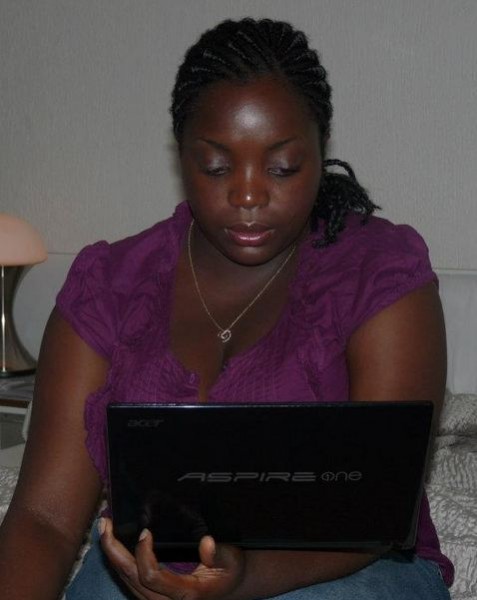
Mariam Diaby [fr], who is based in Côte d’Ivoire, defines herself above all as an entrepreneur interested in all things digital. Her studies took her as far as London to the London South Bank University.
Julie Owono is a lawyer at the Paris Bar. Originally from Cameroon, she contributes regularly to online publications such Global Voices and Quartz Magazine and is head of the Africa office of Internet Sans Frontières (Internet Without Borders).
Lalatiana Rahariniaina, based in Antananarivo, Madagascar, has been blogging since 2008. Passionate about writing and photography, Lalatiana shares her views on Malagasy society on her French-language blog Ampela Miblaogy (Woman Who Blogs). One of the winners of Radio France International's Mondoblog competition in 2011, she received training from the Atelier des Médias [fr] – RFI in Senegal. Atelier des Médias is a francophone social network that studies the evolution of media around the world.
By Rakotomalala
We asked three talented bloggers from Francophone Africa for their opinions on new media in their region and what being a female geek (known as a ‘geekette‘) means for them.
Mariam Diaby [fr], who is based in Côte d’Ivoire, defines herself above all as an entrepreneur interested in all things digital. Her studies took her as far as London to the London South Bank University.
Julie Owono is a lawyer at the Paris Bar. Originally from Cameroon, she contributes regularly to online publications such Global Voices and Quartz Magazine and is head of the Africa office of Internet Sans Frontières (Internet Without Borders).
Lalatiana Rahariniaina, based in Antananarivo, Madagascar, has been blogging since 2008. Passionate about writing and photography, Lalatiana shares her views on Malagasy society on her French-language blog Ampela Miblaogy (Woman Who Blogs). One of the winners of Radio France International's Mondoblog competition in 2011, she received training from the Atelier des Médias [fr] – RFI in Senegal. Atelier des Médias is a francophone social network that studies the evolution of media around the world.
Mariam Daby. Photo used with her permission
Subscribe to:
Posts (Atom)
